Catch the Falling Stars!
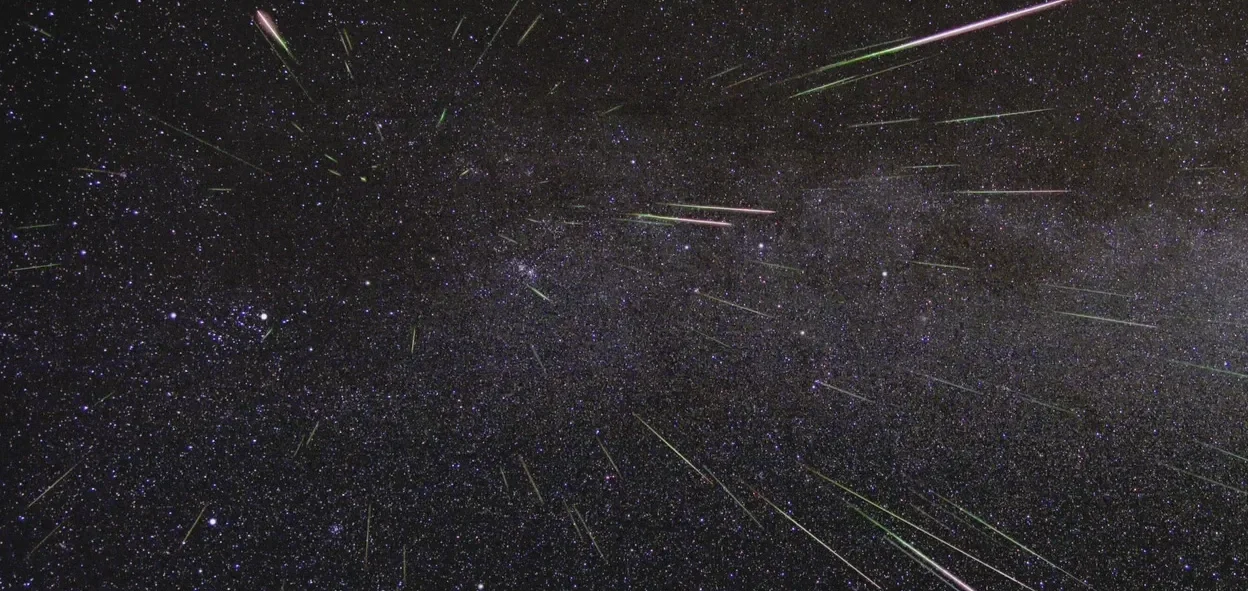
I’m sure you have noticed the backdrop on my website. It is a composite photo of the Perseid meteor shower, some of the “falling stars” that the title of my novel, “The Summer of Falling Stars,” references. The photo was uploaded to Wikipedia by Jim Vajda from Oxford, Ohio. It is a composite of 19 selected frames from a 3.5-hour time-lapse sequence that captured the 2021 Perseid meteor shower above the Granite Mountains in Mojave National Preserve, Calif. (The photo on the blog page is from NASA.)
The Perseids peak in mid-August. Be sure to catch them if you can. Here’s 12-year-old Riley Shrader, the novel’s main character, explaining the meteor shower to his friend, Kendall:
“Why do you want to stay up all night outside?” Kendall asks. “The tent would be more comfy.”
“Well, we are gonna see an amazing meteor shower—the Perseids,” I tell him. “We might see dozens and dozens of falling stars.”
“Wow. Where should we look?” he asks, as he twists his head every which way.
“Look up, you dope,” I say, laughing. “They will be everywhere. Generally, look northeast—in that direction.”
Kendall and I shift our bodies around to give us unimpeded views of the northeastern sky. He lies close to me; his arm touches mine.
“Wow,” he says. “Look at all those stars.”
“Yeah, we’re lucky that we’re on the edge of town, away from light pollution.”
“Do you think there’s life out there?”
“Maybe,” I say. “But there’s a famous equation that says the odds are remote.”
“An equation? Like a math equation?”
“Yeah, why?”
“Maybe I’ll solve it.”
“Okay, sure,” I scoff. “It’s called the Drake Equation, after some guy named Drake, I guess. It takes the number of planets that could support life, times the number of planets that do support life, times the number of those planets that have intelligent life and … and well, it’s complicated.”
“A story problem. My favorite.”
“I’ll look it up so you can do your own calculations,” I say. “You nerd!”
“Hey! I’m not a nerd!” he says, poking me in the ribs. “Tell me more about these meteors.”
“Okay, there’s a huge ball of ice in outer space. It’s called Comet Swift-Tuttle, and it crosses Earth’s orbit every 130 years.”
“A ball of ice?” Kendall interrupts. “Doesn’t the sun melt it?”
“Well, yeah … kinda,” I continue, “As the comet gets closer to the sun, it heats up, and pieces of it break off. A big stream of those pieces floats in space, and Earth goes through it every year. … Follow me so far?”
“Yep. A big stream of icy pieces,” he says. “Earth plows through it. Gotcha.”
“The pieces are like little pebbles, and they catch fire as they cross into Earth’s atmosphere,” I go on. “That’s when they become meteors.”
“Wow.”
“We’re a little early—the meteor storm peaks next week—so we may only see a couple dozen, if we’re lucky,” I say. “But, at its peak in about a week, we could see about 100 of them every night.”
“Why don’t we wait until then?” he asks.
“There’s gonna be a full moon then, so they will be hard to see. And starting tomorrow, we’ll be busy with Sunflower Days, so this is our best chance of seeing them. … Now, here’s something cool: There’s a slight chance”—I pinch my thumb and index finger together—“that in about 25 hundred years, the comet will smash into us.”
“Whoa. That’s scary!” he says. “And kinda cool. What if it happens tonight?”
“It won’t,” I assure him. “Scientists have tracked the orbits of the comet and Earth. They would warn everyone if it was gonna happen.”
“We hope … What will happen when it does come?” Kendall asks.
“Oh, just the end of the world,” I answer.
“Oh, man …”
“But by then, we’ll have a way to deflect them or prevent them in the first place,” I say. “In 2,000 years, we’ll probably have space colonies on other planets.”
Kendall stays quiet for a bit, staring up at the sky.
“Why are they called the Perseids?” he asks.
“Good question! This meteor shower is named for the constellation Perseus because that’s where the meteors appear to come from,” I say, and then point to the sky. “See that constellation that looks like a W?”
“Uh-huh.”
“That’s Cassiopeia. She is sitting on her lounge chair, see?”
“Yes! That totally looks like a lounge chair!”
“Yep. Cassiopeia was Perseus’ mother-in-law. The constellation of Perseus is below her and a bit to the left. See his head there … and his shoulders?”
I point.
“Yeah …,” he says. “What’s so special about him?”
“Well, he … oh, I better back up a bit. Perseus was a son of Zeus, and he was the grandfather of Hercules.”
“Hey, we know a Hercules, don’t we?” Kendall says. “Think they’re related?
“I doubt it,” I respond. “Oh, hey, here’s a cool myth about him. Hercules’ mother abandoned him in the woods. The goddess Minerva found him and took him to Juno, the queen of the gods. Juno breastfed him for a little while, and then – Hercules bit off her nipple!”
“What!?” Kendall exclaims.
“Yeah, baby Herk bit off her nipple. Juno pushed him away, and her milk spilled across the night sky, and that’s what formed the Milky Way!”
“Ha-ha-ha,” he laughs. “I get it—‘Milky’ Way.”
“Anyway, we were talking about Perseus,” I continue. “He killed Medusa the Gorgon. She was this half-naked monster with snakes for hair. Whenever she looked anyone in the eyes, they would turn to stone.—Oh! Oh! So, this one guy was looking at Medusa. He got a good look at her boobs—since she left them hanging out all the time—and she got a good look at him looking at her. He turned around and ran away. Someone asked him why he was running. He pointed to his dick and said, ‘It’s true! I’m turning to stone!’”
Kendall snickers. “Ha! Good one!” he says.
“So, Perseus used a shiny shield like a mirror to look at Medusa, and he cut off her head and put it in a bag.”
“In a bag? Like a to-go bag? Did he get a side of fries?”
“Har-de-har. So, her sisters, who were also gorgons, came after him. He tried to hide out with King Atlas, but Atlas did not want Medusa to come crashing in on his country. Atlas told Perseus to go away. That pissed off Perseus, so he took Medusa’s head out of the bag and turned the king into the Atlas Mountains, which are on the coast of Africa.”
“Atlas? Like a book of maps?” Kendall asks.
“Yep. That’s where the word comes from. And also, the ‘Atlantic’ Ocean.”
“Cool. And doesn’t Atlas hold the whole world on his shoulders? I kinda remember something like that.”
“Yeah, but I think that came later, in a different myth. In this one, Perseus turned him to stone and left him there. So then, he stopped to visit King Cepheus and Queen Cassiopeia. She had bragged that her daughter, Andromeda, was more beautiful than the sea nymphs—which were like mermaids, I think. This pissed off Poseidon, the god of the sea. He sent a sea serpent, the Cetus, to destroy their land.
“An oracle told them that the Cetus could not be stopped unless they sacrificed their daughter. So, Andromeda was chained naked to a rock on the shore —”
“Naked? Like naked-naked?” Kendall interrupts.
“Ha, yes. Perseus used his winged sandals—which he got from Hermes—to fly to her and rescue her. He killed the Cetus with Medusa’s head. And then he married Andromeda.”
“Wow, that’s a helluva story,” Kendall says. “How do you know all that?”
“I read a book about the myths of the gods, of course,” I say. “There’s a lot more to it, but I guess that’s good for now, so let’s just say ‘they lived happily ever after.’”
“Hey, I just saw a falling star!” Kendall shouts.
“Cool. Where?” I ask.
“There.”
He scoots closer to me and holds his arm up so it’s in my line of sight. Soon, I see one. Then another. And another. They are like fireflies zooming over us. Kendall lowers his arm and puts it behind my head. I scrunch over and rest my head on his shoulder. We lie like that for over an hour and watch the celestial fireworks show. I feel comfortable and secure in Kendall’s arms. I look up at him. He is focusing on the sky. I focus on him. After a while, the “stars” stop falling ...
I jerk awake. I must have dozed off. My head is still on Kendall’s shoulder. His arm is still around me. He looks at me.
“Hey, sleepy head,” he says.
“Hey,” I say. “You make a nice pillow.”
“Thanks,” he says. “Since I couldn’t move without waking you, I’ve just been lying here thinking.”
“What have you been thinking about?”
“Oh, the end of the world,” he says.
“Buddy, it ain’t gonna happen in our lifetime, so don’t worry your pretty little head about it,” I say as I slap his chest.
Riley and Kendall have a very special friendship, and something extraordinary happens later that night. But I won’t spoil it for you.
To see the Perseids as they saw them, go outside just before midnight and look to the northeast. There’s a new moon, so the sky will be dark—if you avoid city lights. The shower peaks around Aug. 12, and you may see 100 or more streaks of light